For a long time, education in India was largely associated with academic qualifications. Students completed school, selected a traditional academic stream and worked towards obtaining a degree.
But as the nature of work started changing, another question became increasingly important:
Is a qualification alone enough, or do students also need practical skills?
Industries are becoming more specialised, technology is changing workplaces, and employers increasingly require people who can apply their knowledge in practical situations.
This changing environment has contributed to a greater focus on vocational education, skill development and practical learning in India.
The shift is not simply about introducing more courses. It is about changing how students prepare themselves for the world of work.
Why Did India Need a Greater Focus on Vocational Education?
India has a large and diverse student population entering education and eventually the workforce every year.
However, traditional education has often placed greater emphasis on academic learning, examinations and theoretical knowledge.
This created a gap between what students learned in classrooms and the practical skills required in many workplaces.
Vocational education emerged as one way of addressing this gap.
The idea is simple:
Education should not only help students understand concepts; it should also help them develop skills that can be applied in real-life situations.
This is particularly relevant in sectors where practical knowledge is an important part of professional work.
The National Education Policy 2020 and Vocational Education
A major step in India’s education reform was the introduction of the National Education Policy (NEP) 2020.
The policy places greater emphasis on holistic education, skill development, experiential learning and vocational education.
One of the important ideas behind NEP 2020 is to reduce the separation between academic and vocational education.
Instead of treating vocational education as something completely separate from mainstream education, the policy promotes greater integration of vocational exposure and skill-based learning into the education system.
This represents a broader change in the way education and career preparation are viewed.
Why Was This Change Important?
One reason behind the policy focus is the changing relationship between education and employment.
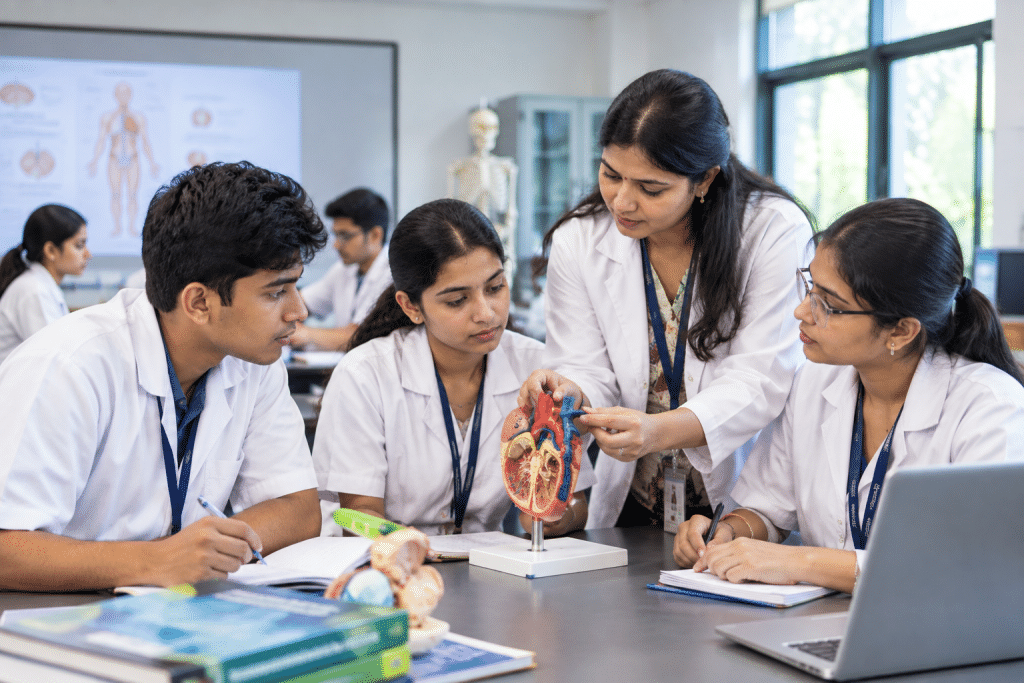
Students need knowledge, but many careers also require technical abilities, practical experience, problem-solving skills and familiarity with professional environments.
A student may understand a concept theoretically but still need practical exposure to understand how that concept is applied at work.
Vocational education aims to strengthen this connection.
It can help students move from:
Learning a concept → Understanding its application → Developing a practical skill → Preparing for a professional environment
Vocational Education Is Not “Less Than” Academic Education
There is still a common perception that vocational education is an alternative only for students who do not want traditional academic education.
That perception is changing.
Vocational education can be a different educational pathway focused more strongly on practical and technical skills.
A student who enjoys practical learning, technology, healthcare procedures or specialised technical work may find a vocational pathway relevant to their interests.
The important question is not whether one pathway is better than another.
The question is:
Which type of learning matches a student’s interests, abilities and career goals?
Why Is Skill-Based Learning Important in Healthcare?
Healthcare is one sector where theoretical knowledge and practical skills need to work together.
Hospitals, diagnostic centres, laboratories and other healthcare facilities depend on professionals working across many specialised areas.
Healthcare is not limited to doctors.
There are trained professionals involved in:
- B.Voc in Medical Laboratory Technology
- B.Voc Medical Image Technology
- B.Voc in Operation Theater
- B.Voc in Patient Care
- Physiotherapy and rehabilitation
- B.Voc in Critical Care Technology
These areas require specialised knowledge and practical understanding.
This is why vocational and skill-oriented education can have an important role in preparing students for allied healthcare fields.
The Growing Importance of Paramedical Education
As healthcare services become more specialised, there is a need for trained professionals across different support and technical functions.
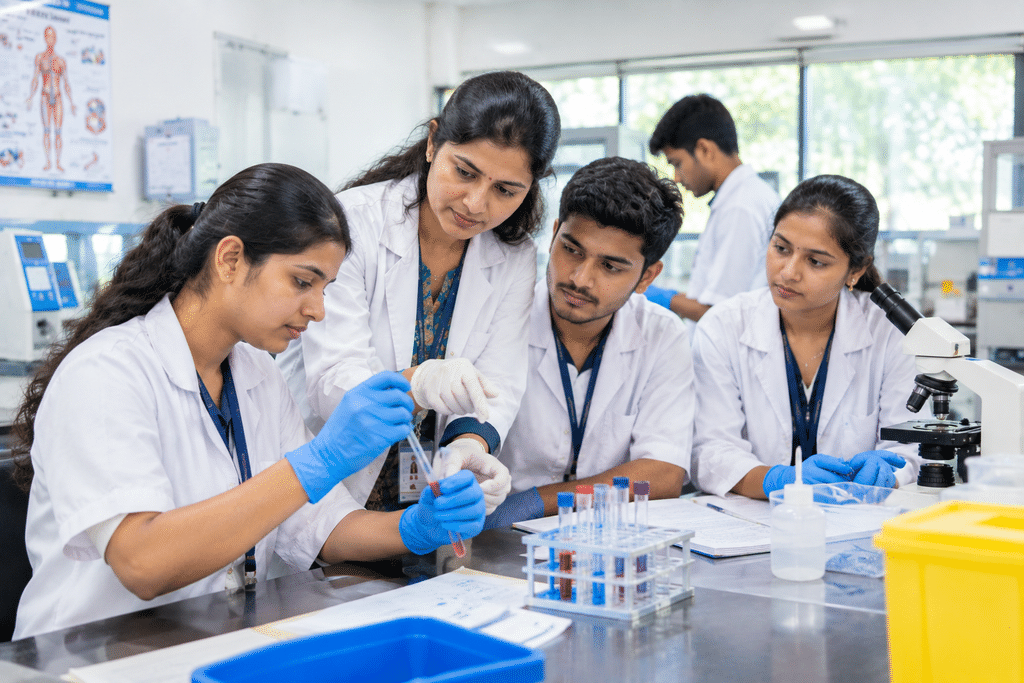
Paramedical education provides students with opportunities to explore these specialised areas.
Instead of looking at healthcare as a single career path, students can explore different fields based on their interests.
For example, a student interested in laboratory work may explore medical laboratory technology.
A student interested in diagnostic imaging may explore radiology-related education.
Others may be interested in dialysis technology, operation theatre technology, patient care or rehabilitation.
This variety is one of the reasons paramedical education is becoming an area of interest for students exploring healthcare careers.
Vocational Learning: From Classroom to Practical Environment
One of the key differences in vocational education is its focus on application.
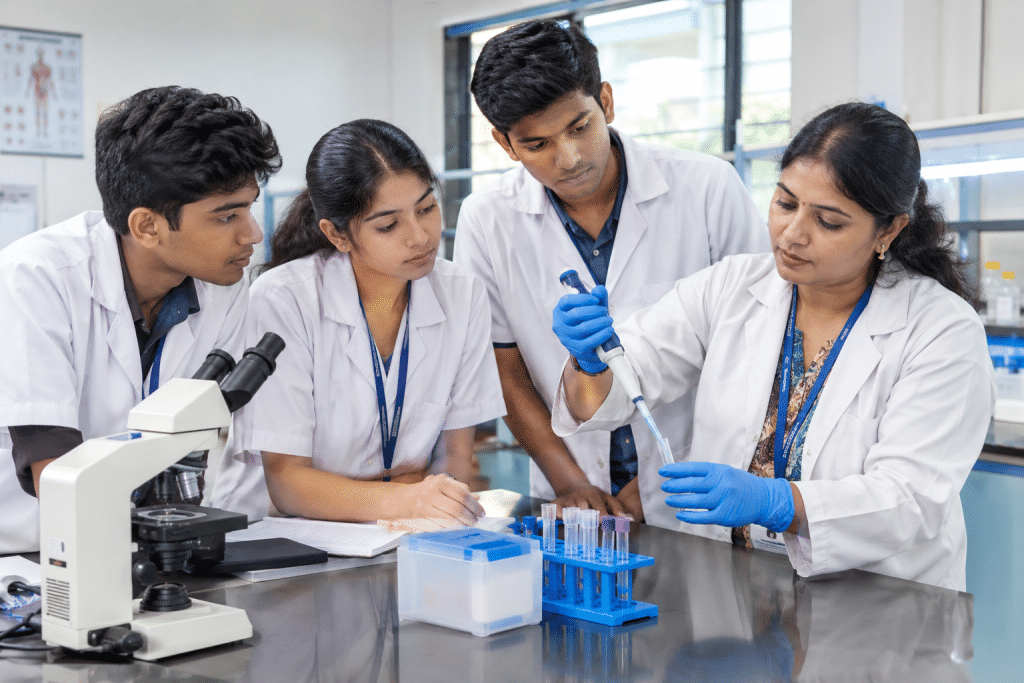
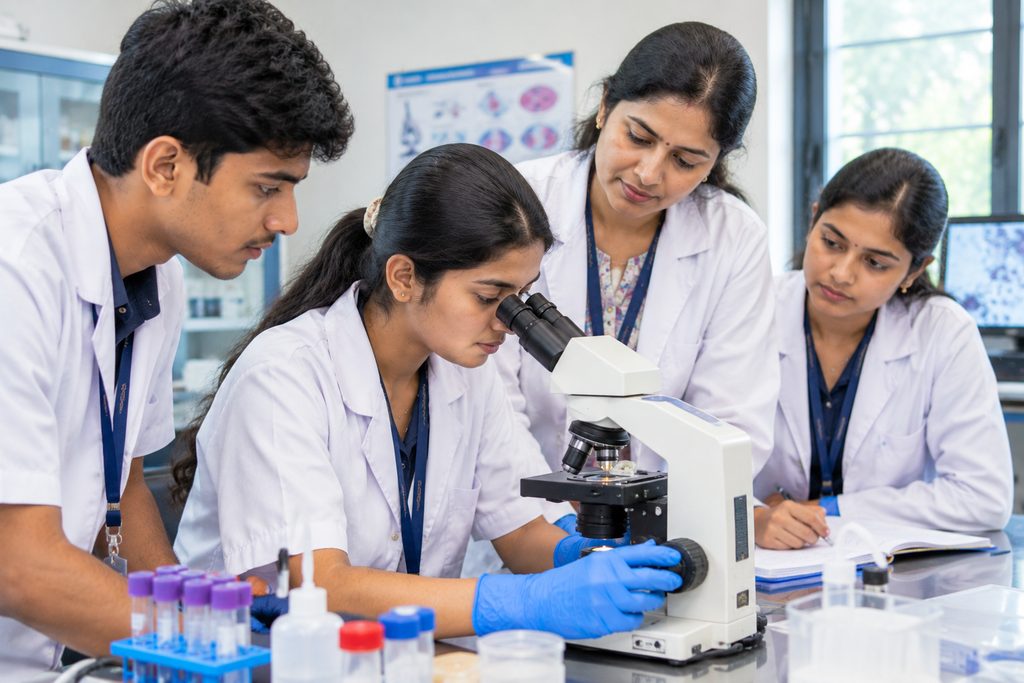
Students can learn concepts in the classroom and then understand how those concepts relate to practical situations.
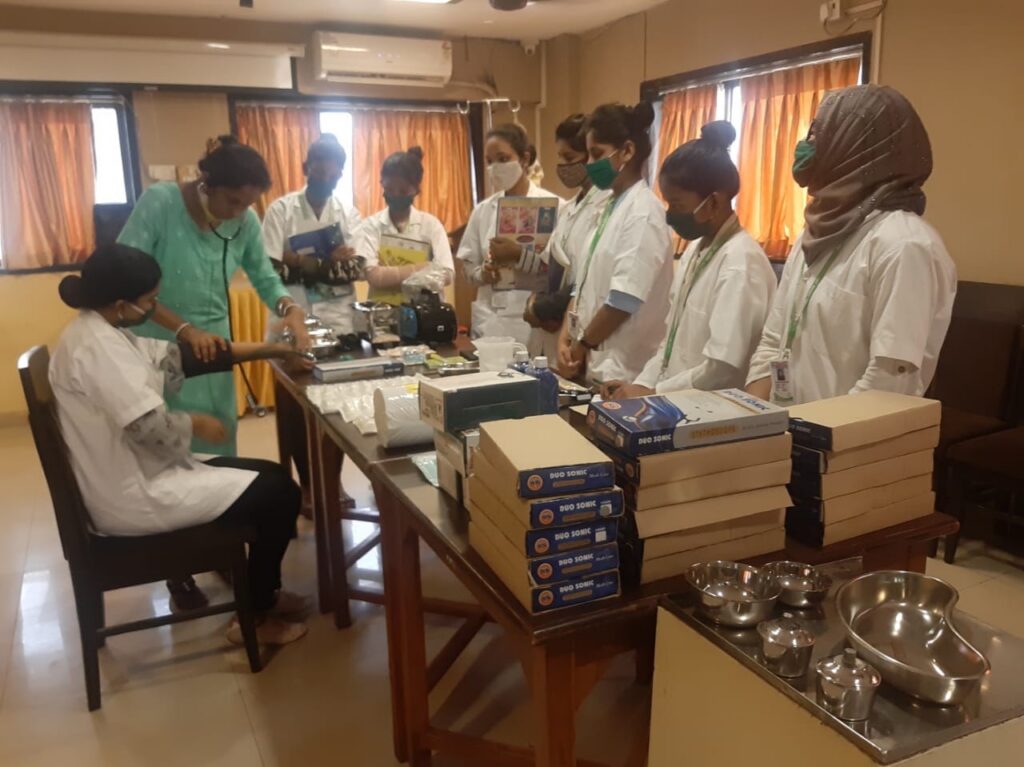
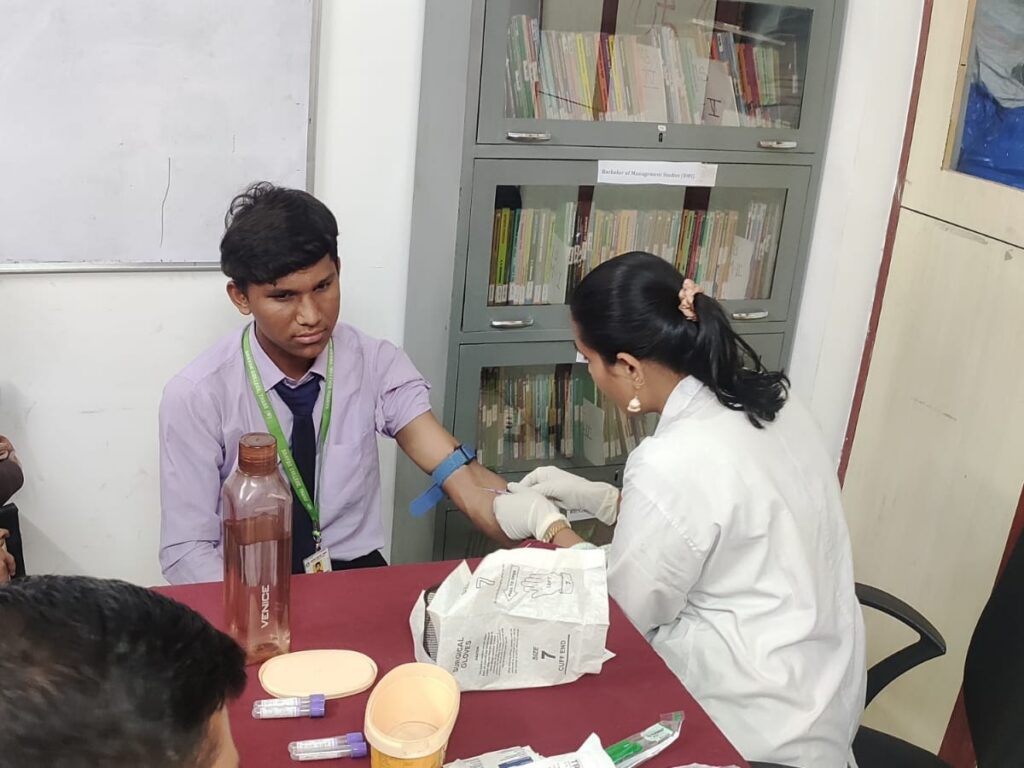
In healthcare education, practical exposure can help students become familiar with equipment, procedures, safety practices, professional responsibilities and workplace environments.
This can make learning more connected to the actual field.
The goal is not simply to know what something is, but to understand how it works and where that knowledge is used.
Why Practical Skills Matter for Students
Imagine two students learning about a healthcare procedure.
One student only reads about the procedure in a textbook.
Another student learns the same concept and also gets an opportunity to observe demonstrations and understand its practical application.
Both have learned the concept, but their learning experiences are different.
Practical exposure can help students develop familiarity and confidence with professional processes.
This is why skill-based education is becoming an important part of modern career preparation.
Why Choose Sahyog College of Paramedical?
The changing education landscape creates an opportunity for institutions to focus on practical, career-oriented learning.
Sahyog College of Paramedical focuses on paramedical and healthcare-oriented education, helping students explore specialised fields within the allied healthcare sector.
The college provides students with opportunities to learn about healthcare concepts while developing practical understanding related to their chosen area.
Students can explore vocational and paramedical pathways in areas such as laboratory technology, radiology, dialysis technology, operation theatre technology, patient care and other allied healthcare fields.
Learning With a Practical Perspective
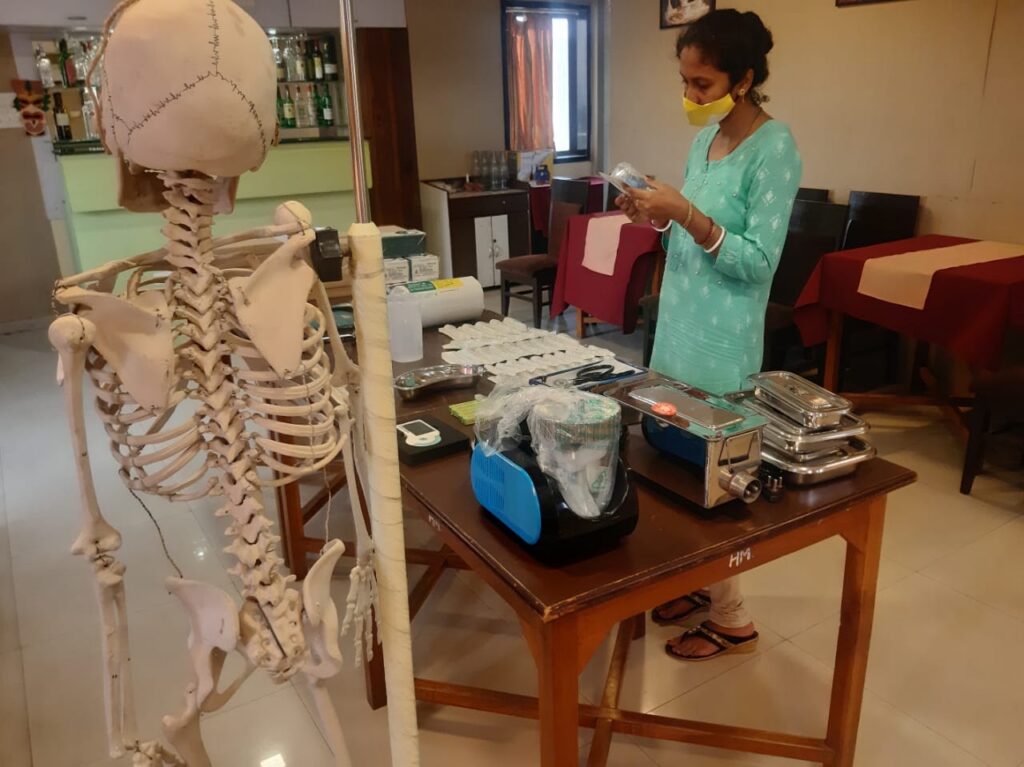
Healthcare education becomes more meaningful when students can connect classroom concepts with practical applications.
At Sahyog College of Paramedical, practical-oriented learning is an important part of the educational approach.
Students can develop an understanding of:
- Healthcare procedures
- Technical skills
- Equipment and technology
- Professional responsibilities
- Workplace practices
- Practical healthcare applications
This combination of knowledge and practical exposure can help students prepare for the professional environment they may encounter after completing their education.
The Bigger Change: Education Is Becoming More Skill-Oriented
The movement towards vocational education is part of a larger change in the way education is viewed.
Education is no longer only about passing examinations or completing a qualification.
Students are increasingly interested in questions such as:
What skills will I develop?
Where can I apply those skills?
Will I receive practical exposure?
What areas can I explore after completing my course?
These questions show why skill-based education has become an important part of the conversation around India’s education system.
Vocational Education and the Future of Healthcare Careers
The healthcare sector continues to involve new technologies, specialised services and different professional roles.
As the sector evolves, education also needs to help students understand both knowledge and practical application.
Vocational paramedical education can provide students with a pathway to explore specialised healthcare fields while developing relevant technical and practical skills.
For students who are interested in healthcare but want to explore options beyond conventional medical pathways, vocational paramedical education can be an option to consider.
What Should Students Look for Before Choosing a Vocational Course?
Choosing a vocational course should involve more than looking at the course name.
Students should consider:
- Whether the course matches their interests
- Practical learning opportunities
- Training environment
- Course curriculum
- Duration and eligibility
- Recognition or affiliation where applicable
- Exposure to healthcare environments
- Future career pathways
- The institution providing the programme
Making an informed decision can help students select a learning pathway that matches their goals.
From Policy to Practice
The idea behind vocational education is ultimately about connecting education with real-world skills.
Policies such as NEP 2020 have placed greater emphasis on vocational education and experiential learning, while educational institutions have an important role in turning these ideas into meaningful learning experiences.
For students, this can mean more opportunities to explore practical skills and specialised career pathways.
For healthcare education, the connection is particularly important because professional knowledge needs to work alongside practical understanding.
Start Your Skill-Based Healthcare Journey
The future of education is not necessarily about choosing between academic knowledge and practical skills.
It is increasingly about bringing both together.
For students interested in healthcare, vocational paramedical education can provide an opportunity to explore specialised fields, gain practical exposure and develop technical knowledge relevant to their chosen area.
Sahyog College of Paramedical provides students with a platform to explore vocational and paramedical education with a focus on healthcare learning and practical skill development.
If you are planning your next step after school and are interested in building a career in the healthcare sector, exploring vocational paramedical courses in Thane can be a useful starting point.
Learn the knowledge. Build the skills. Explore your future in healthcare.